

Roux-en-Y Gastric Bypass
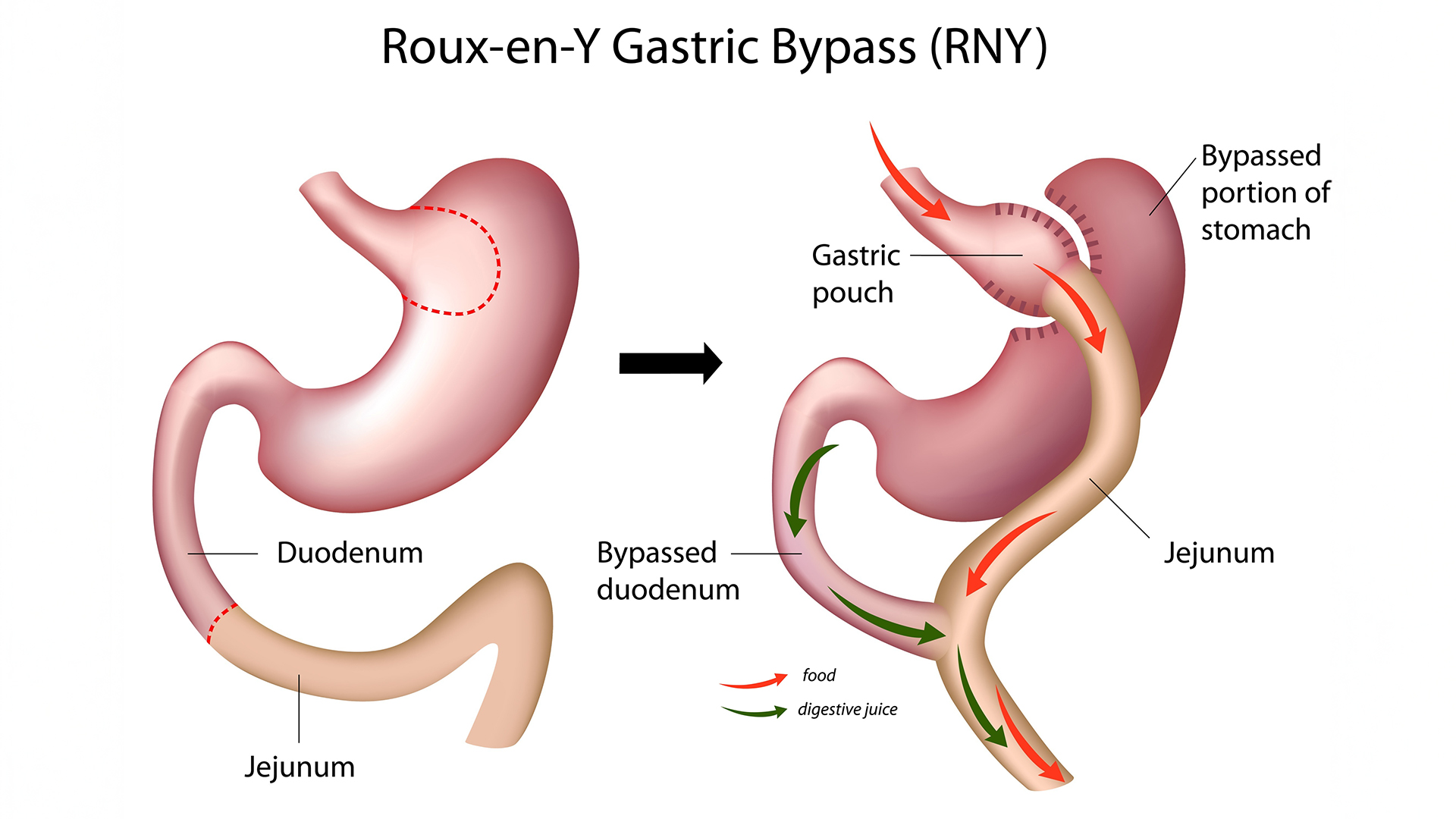
Roux-en-Y Gastric Bypass is a well-established bariatric and metabolic surgery that combines restriction and controlled malabsorption to achieve significant and sustained weight loss. It is particularly effective for patients with severe obesity, type 2 diabetes, gastroesophageal reflux disease (GERD), and complex metabolic disorders.
The procedure involves creating a small stomach pouch that limits food intake, while rerouting a portion of the small intestine to alter digestion and nutrient absorption. This dual mechanism results in reduced calorie intake and profound hormonal changes that improve insulin sensitivity, appetite regulation, and glucose metabolism.
One of the defining advantages of gastric bypass is its powerful metabolic effect. Many patients with type 2 diabetes experience rapid improvement or remission shortly after surgery, often before significant weight loss occurs. This is due to changes in gut hormones that enhance insulin action and glucose control, making gastric bypass a leading option for metabolic surgery.
Gastric bypass is also considered the procedure of choice for obese patients suffering from severe GERD. By reducing acid production and diverting bile away from the esophagus, the surgery provides long-term relief from reflux symptoms and reduces dependence on acid-suppressing medications.
Weight-loss outcomes following Roux-en-Y gastric bypass are substantial. Patients typically lose 65–80% of excess body weight within the first 12–18 months. More importantly, long-term studies demonstrate durable weight loss and significant reduction in obesity-related mortality and cardiovascular risk.
The surgery is performed laparoscopically using minimally invasive techniques, resulting in shorter recovery time and reduced post-operative discomfort. As with all bariatric procedures, careful patient selection and pre-operative optimization are essential to ensure safety and optimal outcomes.
Because gastric bypass alters nutrient absorption, lifelong nutritional monitoring and vitamin supplementation are required. Bariatric programs provide structured follow-up to prevent deficiencies and support long-term success through diet, lifestyle modification, and behavioral support.
Roux-en-Y gastric bypass is not merely a weight-loss operation but a comprehensive metabolic intervention. When performed within a multidisciplinary bariatric program, it offers profound and lasting health benefits for patients with complex obesity-related disease.
The procedure involves creating a small stomach pouch that limits food intake, while rerouting a portion of the small intestine to alter digestion and nutrient absorption. This dual mechanism results in reduced calorie intake and profound hormonal changes that improve insulin sensitivity, appetite regulation, and glucose metabolism.
One of the defining advantages of gastric bypass is its powerful metabolic effect. Many patients with type 2 diabetes experience rapid improvement or remission shortly after surgery, often before significant weight loss occurs. This is due to changes in gut hormones that enhance insulin action and glucose control, making gastric bypass a leading option for metabolic surgery.
Gastric bypass is also considered the procedure of choice for obese patients suffering from severe GERD. By reducing acid production and diverting bile away from the esophagus, the surgery provides long-term relief from reflux symptoms and reduces dependence on acid-suppressing medications.
Weight-loss outcomes following Roux-en-Y gastric bypass are substantial. Patients typically lose 65–80% of excess body weight within the first 12–18 months. More importantly, long-term studies demonstrate durable weight loss and significant reduction in obesity-related mortality and cardiovascular risk.
The surgery is performed laparoscopically using minimally invasive techniques, resulting in shorter recovery time and reduced post-operative discomfort. As with all bariatric procedures, careful patient selection and pre-operative optimization are essential to ensure safety and optimal outcomes.
Because gastric bypass alters nutrient absorption, lifelong nutritional monitoring and vitamin supplementation are required. Bariatric programs provide structured follow-up to prevent deficiencies and support long-term success through diet, lifestyle modification, and behavioral support.
Roux-en-Y gastric bypass is not merely a weight-loss operation but a comprehensive metabolic intervention. When performed within a multidisciplinary bariatric program, it offers profound and lasting health benefits for patients with complex obesity-related disease.
Quick Contact
If you have any questions simply use the following contact details.

Working Hours
-
Out-patient Department
Monday to Saturday 08:00 AM - 09:00 PM
Sunday 10:00 AM - 06:00 PM
-
Emergency Department & Pharmacy
Sunday to Saturday 24x7



Book Appointments, Inquire, or Manage Your Care Easily – Get in Touch via
 04 406 3000
  04 406 3000
Quick Links
Legal
Working Hours
-
Out-patient Department
Monday to Saturday | 8 AM to 9 PM
Sunday | 10 AM to 6 PM
Emergency Department & Pharmacy | 24x7
Connect with us!




©2026 IMH. All Rights Reserved. Ministry of Health License No : TEBMJIU0-060622