

Optical Coherence Tomography (OCT) Diagnostics
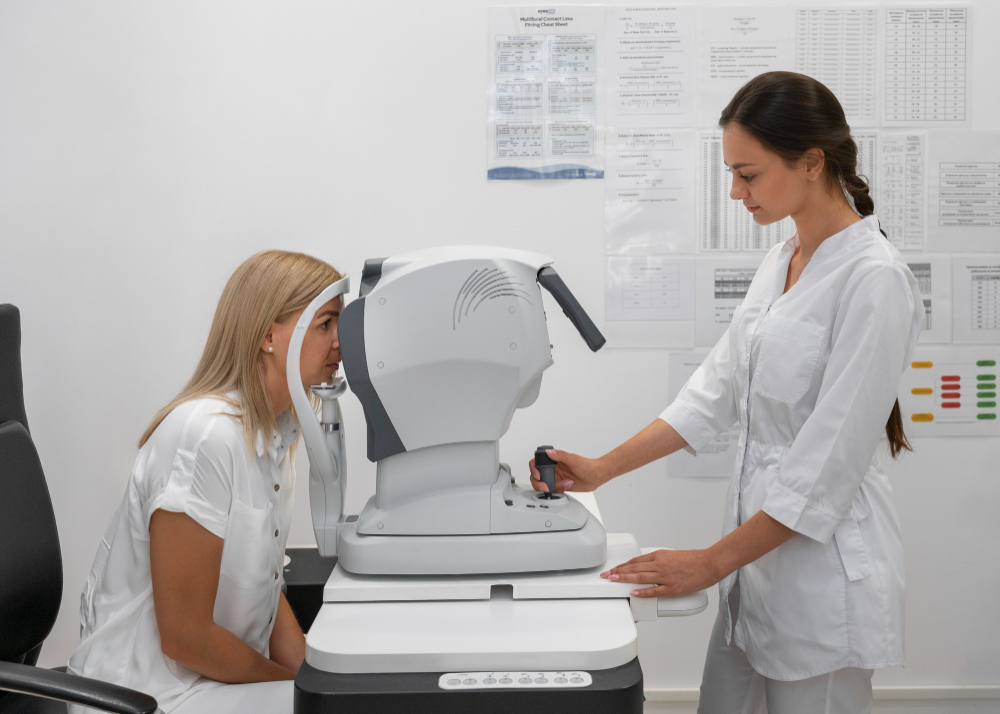
Optical Coherence Tomography (OCT) is a non-invasive, high-resolution imaging technology that has become a cornerstone of modern ophthalmic diagnosis and disease monitoring. OCT provides cross-sectional, three-dimensional images of ocular structures, allowing clinicians to visualize microscopic layers of the retina, optic nerve head, and macula with remarkable precision. This level of detail is essential for early detection, accurate diagnosis, and ongoing management of a wide range of eye diseases that may not be apparent on routine examination.
OCT works by using light waves to capture detailed images of internal eye structures, similar in principle to ultrasound imaging but using light instead of sound. The result is a highly detailed “optical biopsy” that reveals retinal thickness, layer integrity, fluid accumulation, and nerve fiber health. Because OCT is fast, painless, and does not involve radiation, it can be safely repeated as often as required for disease monitoring.
OCT is indispensable in the diagnosis and management of retinal diseases such as diabetic macular edema, diabetic retinopathy, age-related macular degeneration, retinal vein occlusion, macular holes, epiretinal membranes, and central serous chorioretinopathy. Subtle changes in retinal thickness or fluid accumulation can be detected early, often before noticeable vision loss occurs. This enables timely intervention and better visual outcomes.
In glaucoma care, OCT plays a critical role in assessing the optic nerve head and retinal nerve fiber layer. Progressive thinning of these layers is a hallmark of glaucoma-related damage. OCT allows objective measurement and comparison over time, helping clinicians detect progression even when visual field changes are minimal or absent. This makes OCT an essential tool for long-term glaucoma monitoring.
OCT is also valuable in neuro-ophthalmology, helping assess optic nerve disorders, optic neuritis, and other neurological conditions affecting the visual pathway. In pediatric ophthalmology, OCT assists in evaluating retinal and optic nerve abnormalities in children who may not cooperate with subjective tests.
From a patient perspective, OCT diagnostics enhance understanding of disease status. Visual images help clinicians explain conditions, treatment plans, and progression in a clear and tangible way, improving compliance and trust. OCT findings often guide critical treatment decisions such as initiating intravitreal injections, adjusting therapy frequency, or referring for surgery.
As eye diseases increasingly require long-term monitoring rather than one-time treatment, OCT has become an essential diagnostic backbone of ophthalmology services. Its accuracy, reproducibility, and ability to detect disease at the earliest stages make it indispensable in preserving vision and improving patient outcomes.
OCT works by using light waves to capture detailed images of internal eye structures, similar in principle to ultrasound imaging but using light instead of sound. The result is a highly detailed “optical biopsy” that reveals retinal thickness, layer integrity, fluid accumulation, and nerve fiber health. Because OCT is fast, painless, and does not involve radiation, it can be safely repeated as often as required for disease monitoring.
OCT is indispensable in the diagnosis and management of retinal diseases such as diabetic macular edema, diabetic retinopathy, age-related macular degeneration, retinal vein occlusion, macular holes, epiretinal membranes, and central serous chorioretinopathy. Subtle changes in retinal thickness or fluid accumulation can be detected early, often before noticeable vision loss occurs. This enables timely intervention and better visual outcomes.
In glaucoma care, OCT plays a critical role in assessing the optic nerve head and retinal nerve fiber layer. Progressive thinning of these layers is a hallmark of glaucoma-related damage. OCT allows objective measurement and comparison over time, helping clinicians detect progression even when visual field changes are minimal or absent. This makes OCT an essential tool for long-term glaucoma monitoring.
OCT is also valuable in neuro-ophthalmology, helping assess optic nerve disorders, optic neuritis, and other neurological conditions affecting the visual pathway. In pediatric ophthalmology, OCT assists in evaluating retinal and optic nerve abnormalities in children who may not cooperate with subjective tests.
From a patient perspective, OCT diagnostics enhance understanding of disease status. Visual images help clinicians explain conditions, treatment plans, and progression in a clear and tangible way, improving compliance and trust. OCT findings often guide critical treatment decisions such as initiating intravitreal injections, adjusting therapy frequency, or referring for surgery.
As eye diseases increasingly require long-term monitoring rather than one-time treatment, OCT has become an essential diagnostic backbone of ophthalmology services. Its accuracy, reproducibility, and ability to detect disease at the earliest stages make it indispensable in preserving vision and improving patient outcomes.
Quick Contact
If you have any questions simply use the following contact details.

Working Hours
-
Out-patient Department
Monday to Saturday 08:00 AM - 09:00 PM
Sunday 10:00 AM - 06:00 PM
-
Emergency Department & Pharmacy
Sunday to Saturday 24x7



Book Appointments, Inquire, or Manage Your Care Easily – Get in Touch via
 04 406 3000
  04 406 3000
Quick Links
Legal
Working Hours
-
Out-patient Department
Monday to Saturday | 8 AM to 9 PM
Sunday | 10 AM to 6 PM
Emergency Department & Pharmacy | 24x7
Connect with us!




©2026 IMH. All Rights Reserved. Ministry of Health License No : TEBMJIU0-060622