

Endoscopic Ultrasound (EUS)
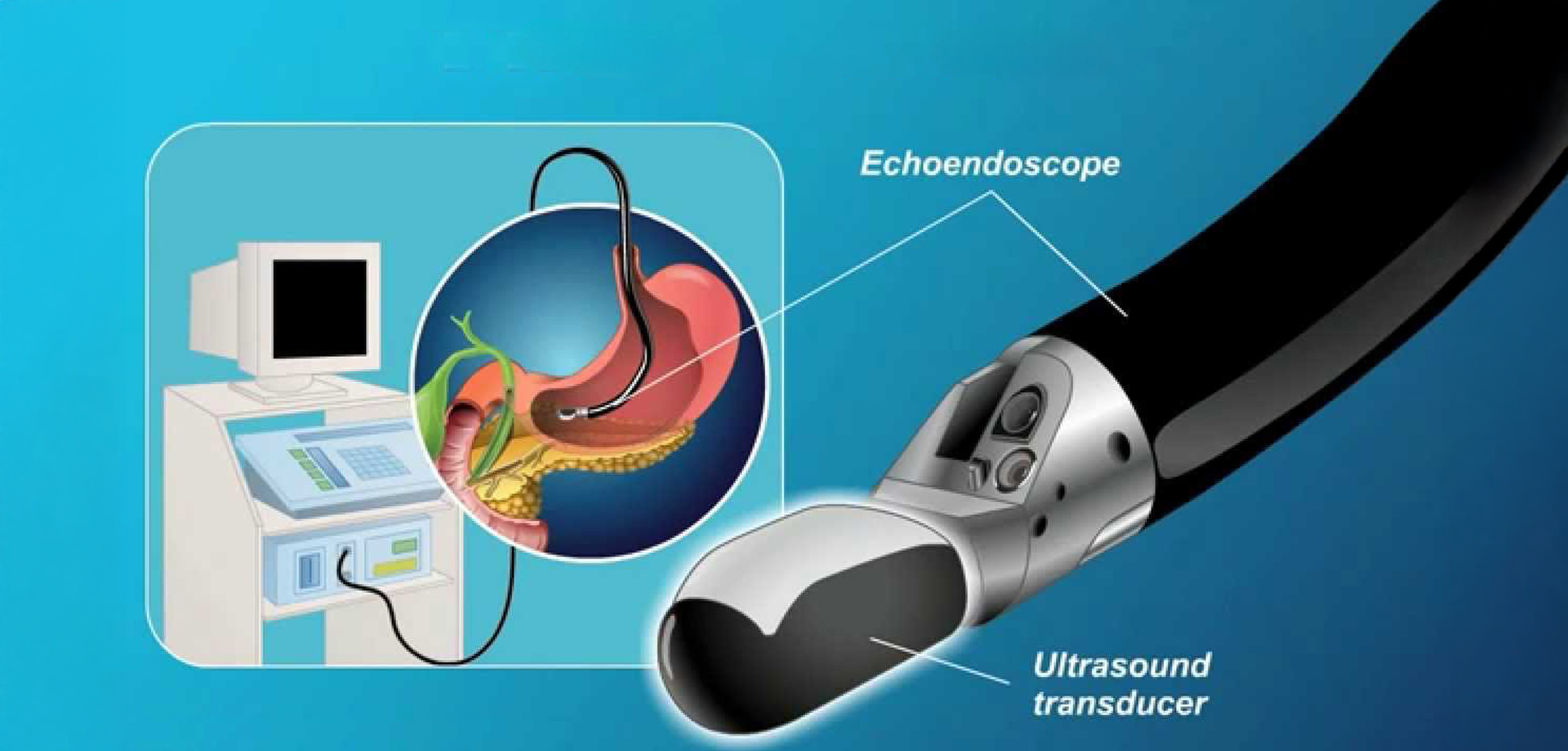
Endoscopic Ultrasound (EUS) is an advanced diagnostic and interventional gastroenterology procedure that combines endoscopy with high-frequency ultrasound imaging to evaluate the gastrointestinal tract and surrounding organs with exceptional precision. It plays a critical role in the assessment of complex digestive diseases, particularly those involving the pancreas, bile ducts, gastrointestinal wall layers, and nearby lymph nodes. In modern gastroenterology practice, EUS is considered one of the most accurate tools for early detection, staging, and characterization of gastrointestinal and pancreatic disorders.
The procedure is performed using a specialized endoscope fitted with an ultrasound probe at its tip. This allows the ultrasound transducer to be positioned directly adjacent to internal organs from within the digestive tract, producing high-resolution images that cannot be achieved with external ultrasound, CT scans, or MRI alone. By placing the ultrasound probe in close proximity to the target organ, EUS provides detailed visualization of tissue layers, vascular structures, and small lesions that may otherwise go undetected.
EUS is commonly indicated for evaluation of pancreatic masses, cysts, and chronic pancreatitis, as well as bile duct abnormalities and gallbladder disease. It is also widely used for staging gastrointestinal cancers of the esophagus, stomach, and rectum by accurately assessing tumor depth and lymph node involvement. Additionally, EUS is invaluable in investigating unexplained abdominal pain, abnormal imaging findings, and submucosal lesions discovered during routine endoscopy.
A major advantage of EUS is its ability to guide fine-needle aspiration or biopsy (EUS-FNA/FNB). Under real-time ultrasound guidance, tissue samples can be obtained safely and precisely from deep-seated lesions such as pancreatic tumors or lymph nodes. This allows for definitive diagnosis, cancer staging, and treatment planning while avoiding the need for open surgical biopsy.
The procedure is performed under sedation to ensure patient comfort and is conducted in a specialized endoscopy suite with continuous monitoring. While EUS is technically complex, it is generally well tolerated and associated with a low complication rate when performed by experienced specialists. The duration of the procedure varies depending on complexity but typically ranges from 30 to 60 minutes.
Following EUS, patients receive a detailed explanation of findings and biopsy results, if obtained. These results guide further management, which may include medical therapy, surgical referral, or oncological treatment. EUS significantly enhances diagnostic accuracy and allows earlier intervention, which is particularly important in pancreatic and gastrointestinal cancers where early detection directly impacts outcomes.
Endoscopic Ultrasound has become an indispensable tool in advanced gastroenterology, offering unmatched diagnostic clarity and minimally invasive access to complex gastrointestinal conditions.
The procedure is performed using a specialized endoscope fitted with an ultrasound probe at its tip. This allows the ultrasound transducer to be positioned directly adjacent to internal organs from within the digestive tract, producing high-resolution images that cannot be achieved with external ultrasound, CT scans, or MRI alone. By placing the ultrasound probe in close proximity to the target organ, EUS provides detailed visualization of tissue layers, vascular structures, and small lesions that may otherwise go undetected.
EUS is commonly indicated for evaluation of pancreatic masses, cysts, and chronic pancreatitis, as well as bile duct abnormalities and gallbladder disease. It is also widely used for staging gastrointestinal cancers of the esophagus, stomach, and rectum by accurately assessing tumor depth and lymph node involvement. Additionally, EUS is invaluable in investigating unexplained abdominal pain, abnormal imaging findings, and submucosal lesions discovered during routine endoscopy.
A major advantage of EUS is its ability to guide fine-needle aspiration or biopsy (EUS-FNA/FNB). Under real-time ultrasound guidance, tissue samples can be obtained safely and precisely from deep-seated lesions such as pancreatic tumors or lymph nodes. This allows for definitive diagnosis, cancer staging, and treatment planning while avoiding the need for open surgical biopsy.
The procedure is performed under sedation to ensure patient comfort and is conducted in a specialized endoscopy suite with continuous monitoring. While EUS is technically complex, it is generally well tolerated and associated with a low complication rate when performed by experienced specialists. The duration of the procedure varies depending on complexity but typically ranges from 30 to 60 minutes.
Following EUS, patients receive a detailed explanation of findings and biopsy results, if obtained. These results guide further management, which may include medical therapy, surgical referral, or oncological treatment. EUS significantly enhances diagnostic accuracy and allows earlier intervention, which is particularly important in pancreatic and gastrointestinal cancers where early detection directly impacts outcomes.
Endoscopic Ultrasound has become an indispensable tool in advanced gastroenterology, offering unmatched diagnostic clarity and minimally invasive access to complex gastrointestinal conditions.
Quick Contact
If you have any questions simply use the following contact details.

Working Hours
-
Out-patient Department
Monday to Saturday 08:00 AM - 09:00 PM
Sunday 10:00 AM - 06:00 PM
-
Emergency Department & Pharmacy
Sunday to Saturday 24x7



Book Appointments, Inquire, or Manage Your Care Easily – Get in Touch via
 04 406 3000
  04 406 3000
Quick Links
Legal
Working Hours
-
Out-patient Department
Monday to Saturday | 8 AM to 9 PM
Sunday | 10 AM to 6 PM
Emergency Department & Pharmacy | 24x7
Connect with us!




©2026 IMH. All Rights Reserved. Ministry of Health License No : TEBMJIU0-060622