

Rotational Atherectomy (RA)
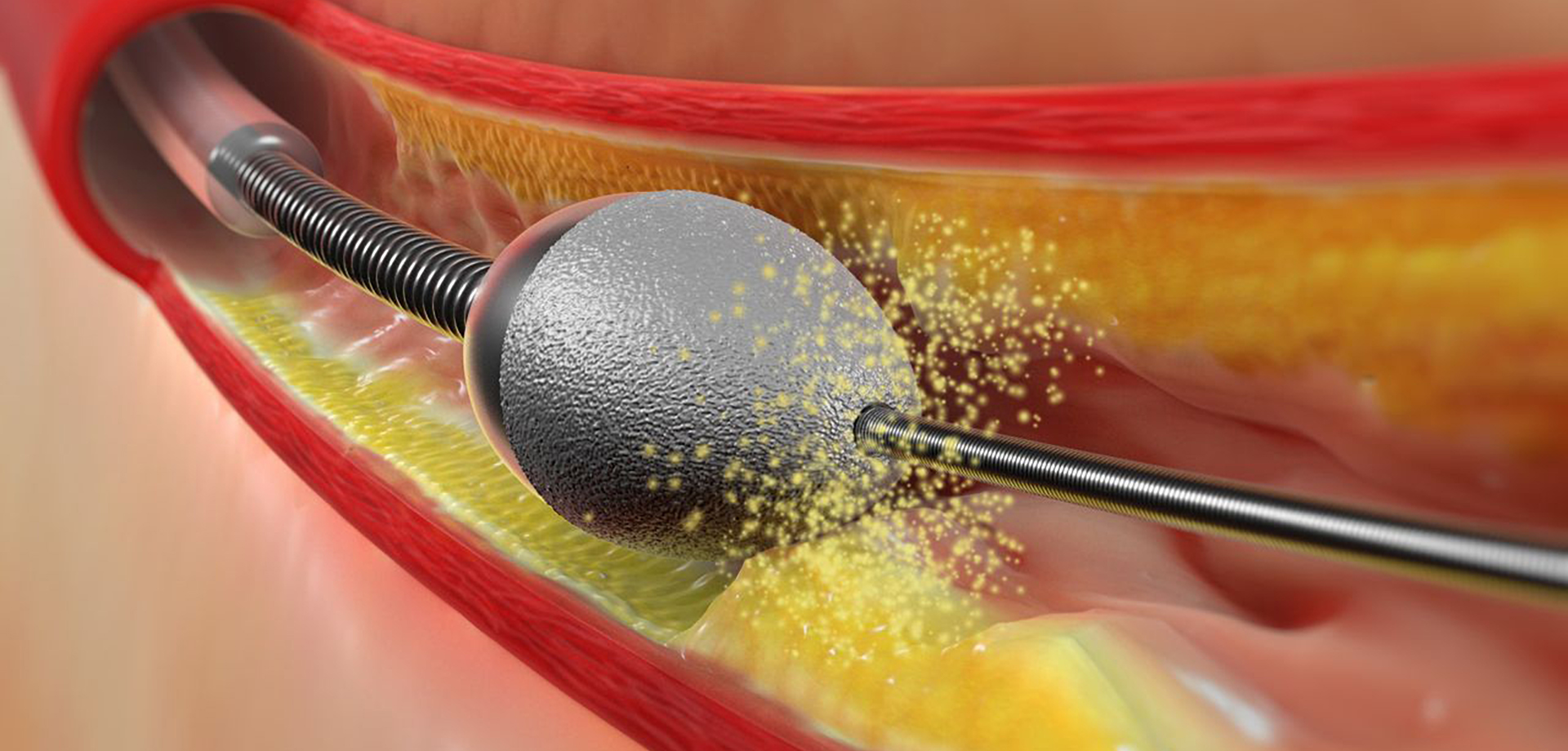
Rotational Atherectomy (RA) is a specialized interventional cardiology procedure designed to treat severely calcified coronary artery lesions that are resistant to conventional angioplasty. Calcified plaques reduce vessel flexibility and can prevent adequate balloon expansion or stent deployment, increasing procedural complexity and risk. RA enables effective plaque modification to facilitate successful coronary intervention.
The procedure uses a high-speed, diamond-coated rotating burr that selectively ablates hard calcified plaque while sparing elastic arterial tissue. By reducing plaque burden and modifying lesion compliance, rotational atherectomy creates a smoother arterial lumen, allowing subsequent balloon dilation and stent placement to be performed safely and effectively.
Rotational atherectomy is typically considered in patients with extensive coronary calcification, long-standing coronary artery disease, or lesions that cannot be crossed or expanded with standard angioplasty equipment. Such patients often include elderly individuals, diabetics, and those with chronic kidney disease.
RA is performed in a cardiac catheterization laboratory by experienced interventional cardiologists. The procedure requires meticulous planning, precise technique, and continuous monitoring to ensure optimal outcomes. Lesion preparation with RA significantly improves the success rate of complex percutaneous coronary interventions.
While RA is a highly effective technique, it is reserved for specific anatomical scenarios due to its technical demands. When used appropriately, it enhances procedural success, improves stent expansion, and reduces the likelihood of restenosis or incomplete revascularization.
Rotational atherectomy remains a valuable tool in advanced interventional cardiology, enabling treatment of complex coronary anatomy that would otherwise limit therapeutic options.
The procedure uses a high-speed, diamond-coated rotating burr that selectively ablates hard calcified plaque while sparing elastic arterial tissue. By reducing plaque burden and modifying lesion compliance, rotational atherectomy creates a smoother arterial lumen, allowing subsequent balloon dilation and stent placement to be performed safely and effectively.
Rotational atherectomy is typically considered in patients with extensive coronary calcification, long-standing coronary artery disease, or lesions that cannot be crossed or expanded with standard angioplasty equipment. Such patients often include elderly individuals, diabetics, and those with chronic kidney disease.
RA is performed in a cardiac catheterization laboratory by experienced interventional cardiologists. The procedure requires meticulous planning, precise technique, and continuous monitoring to ensure optimal outcomes. Lesion preparation with RA significantly improves the success rate of complex percutaneous coronary interventions.
While RA is a highly effective technique, it is reserved for specific anatomical scenarios due to its technical demands. When used appropriately, it enhances procedural success, improves stent expansion, and reduces the likelihood of restenosis or incomplete revascularization.
Rotational atherectomy remains a valuable tool in advanced interventional cardiology, enabling treatment of complex coronary anatomy that would otherwise limit therapeutic options.
Quick Contact
If you have any questions simply use the following contact details.

Working Hours
-
Out-patient Department
Monday to Saturday 08:00 AM - 09:00 PM
Sunday 10:00 AM - 06:00 PM
-
Emergency Department & Pharmacy
Sunday to Saturday 24x7



Book Appointments, Inquire, or Manage Your Care Easily – Get in Touch via
 04 406 3000
  04 406 3000
Quick Links
Legal
Working Hours
-
Out-patient Department
Monday to Saturday | 8 AM to 9 PM
Sunday | 10 AM to 6 PM
Emergency Department & Pharmacy | 24x7
Connect with us!




©2026 IMH. All Rights Reserved. Ministry of Health License No : TEBMJIU0-060622