

Carotid Angioplasty and Stenting (CAS)
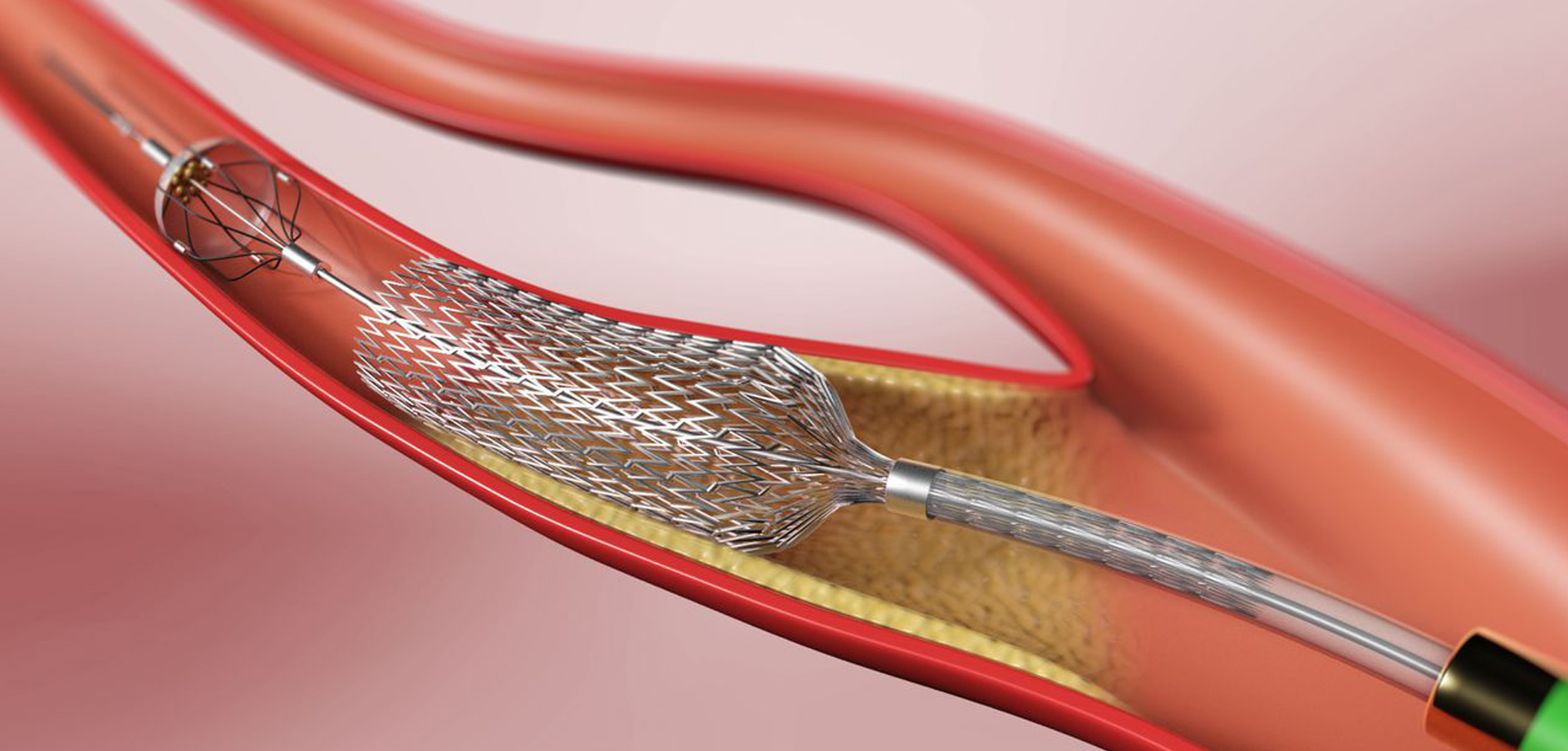
Carotid angioplasty and stenting (CAS) is a minimally invasive vascular procedure used to treat significant narrowing of the carotid arteries, which supply blood to the brain. Carotid artery disease is a major cause of stroke and transient ischemic attacks and often develops silently due to progressive atherosclerosis.
Patients with carotid artery narrowing may be asymptomatic or may present with warning signs such as transient weakness, speech disturbance, visual changes, dizziness, or brief episodes of neurological deficit. In many cases, carotid stenosis is detected incidentally during cardiovascular evaluation. Early intervention is critical to reduce the risk of stroke.
Carotid angiography provides detailed imaging of the carotid arteries, allowing precise assessment of the degree and location of narrowing. When significant stenosis is identified, carotid angioplasty and stenting may be performed to restore adequate blood flow to the brain.
During CAS, a catheter-based approach is used to widen the narrowed segment of the artery, followed by placement of a stent to maintain long-term vessel patency. The procedure is performed under continuous imaging guidance, with cerebral protection strategies employed to minimize the risk of embolization during intervention.
Carotid angioplasty and stenting is particularly suitable for patients who are considered high risk for open surgical carotid endarterectomy due to medical comorbidities, anatomical considerations, or previous neck surgery. Careful patient selection and pre-procedural assessment are essential to ensure safety and effectiveness.
The procedure is performed in a specialized catheterization laboratory by experienced interventional cardiologists or vascular specialists, with close neurological monitoring throughout. The minimally invasive approach allows faster recovery and shorter hospital stays compared to open surgery.
Post-procedure care includes neurological observation, vascular access monitoring, and structured follow-up. Long-term management focuses on stroke prevention, vascular health monitoring, and cardiovascular risk control. When performed in appropriate candidates, CAS significantly reduces stroke risk and improves cerebral perfusion.
Patients with carotid artery narrowing may be asymptomatic or may present with warning signs such as transient weakness, speech disturbance, visual changes, dizziness, or brief episodes of neurological deficit. In many cases, carotid stenosis is detected incidentally during cardiovascular evaluation. Early intervention is critical to reduce the risk of stroke.
Carotid angiography provides detailed imaging of the carotid arteries, allowing precise assessment of the degree and location of narrowing. When significant stenosis is identified, carotid angioplasty and stenting may be performed to restore adequate blood flow to the brain.
During CAS, a catheter-based approach is used to widen the narrowed segment of the artery, followed by placement of a stent to maintain long-term vessel patency. The procedure is performed under continuous imaging guidance, with cerebral protection strategies employed to minimize the risk of embolization during intervention.
Carotid angioplasty and stenting is particularly suitable for patients who are considered high risk for open surgical carotid endarterectomy due to medical comorbidities, anatomical considerations, or previous neck surgery. Careful patient selection and pre-procedural assessment are essential to ensure safety and effectiveness.
The procedure is performed in a specialized catheterization laboratory by experienced interventional cardiologists or vascular specialists, with close neurological monitoring throughout. The minimally invasive approach allows faster recovery and shorter hospital stays compared to open surgery.
Post-procedure care includes neurological observation, vascular access monitoring, and structured follow-up. Long-term management focuses on stroke prevention, vascular health monitoring, and cardiovascular risk control. When performed in appropriate candidates, CAS significantly reduces stroke risk and improves cerebral perfusion.
Quick Contact
If you have any questions simply use the following contact details.

Working Hours
-
Out-patient Department
Monday to Saturday 08:00 AM - 09:00 PM
Sunday 10:00 AM - 06:00 PM
-
Emergency Department & Pharmacy
Sunday to Saturday 24x7



Book Appointments, Inquire, or Manage Your Care Easily – Get in Touch via
 04 406 3000
  04 406 3000
Quick Links
Legal
Working Hours
-
Out-patient Department
Monday to Saturday | 8 AM to 9 PM
Sunday | 10 AM to 6 PM
Emergency Department & Pharmacy | 24x7
Connect with us!




©2026 IMH. All Rights Reserved. Ministry of Health License No : TEBMJIU0-060622