

Alcohol Septal Ablation (ASA)
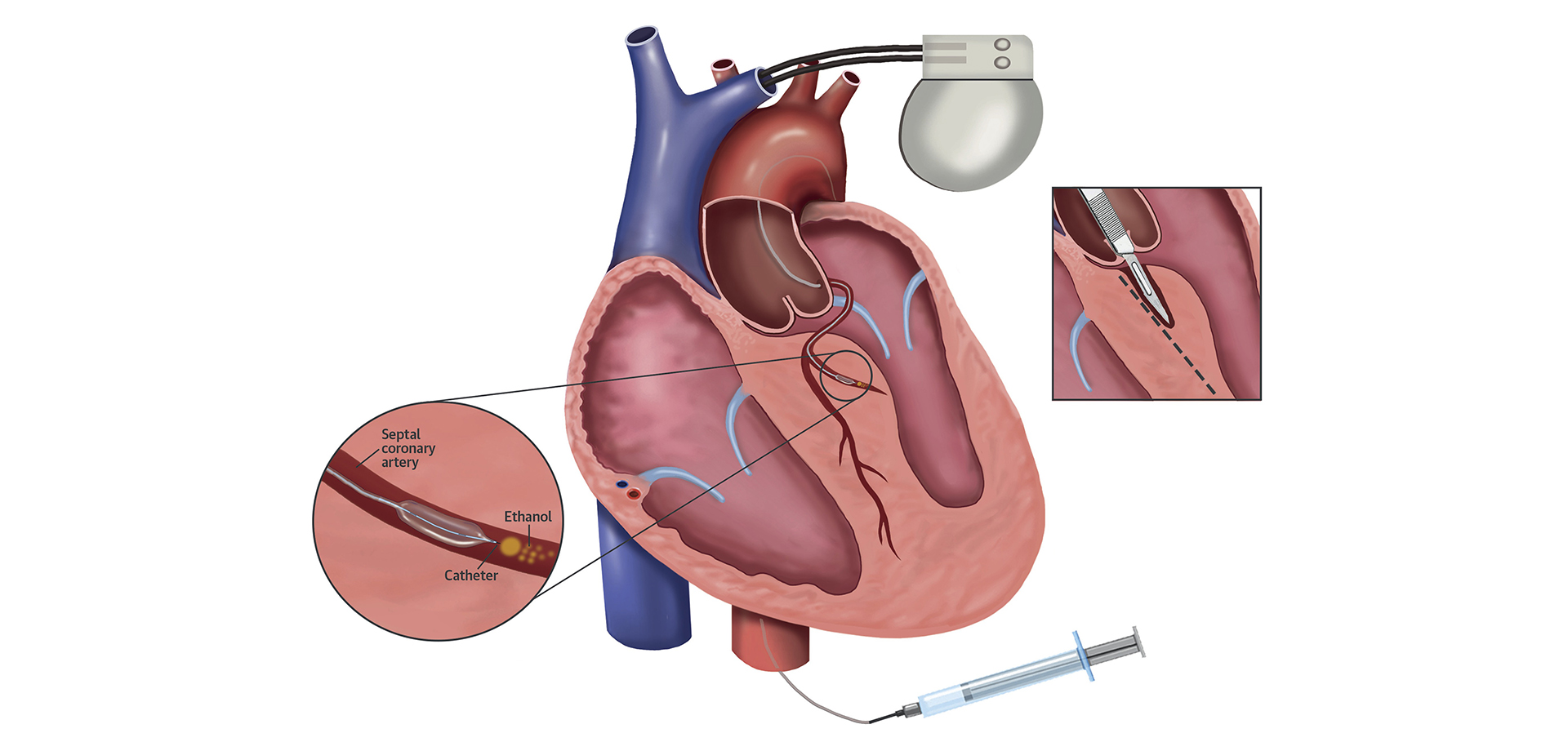
Alcohol Septal Ablation (ASA) is a catheter-based interventional procedure used in the management of hypertrophic obstructive cardiomyopathy (HOCM). In this condition, abnormal thickening of the heart muscle—particularly the interventricular septum—causes obstruction to blood flow from the left ventricle, leading to symptoms such as breathlessness, chest pain, dizziness, and syncope.
ASA aims to reduce the thickness of the obstructing septal muscle by inducing a controlled, localized infarction. This is achieved by delivering a precise amount of alcohol into a targeted septal artery supplying the hypertrophied muscle. Over time, the treated tissue shrinks, reducing obstruction and improving blood flow.
Patients considered for ASA typically have significant symptoms despite optimal medical therapy and demonstrate left ventricular outflow tract obstruction on imaging. Careful patient selection and detailed anatomical assessment are essential to ensure safety and procedural success.
The procedure is performed in a cardiac catheterization laboratory under imaging guidance. Continuous monitoring allows real-time assessment of hemodynamic improvement. ASA offers a less invasive alternative to surgical septal myectomy for appropriately selected patients.
Benefits of ASA include symptom relief, improved exercise tolerance, and enhanced quality of life. However, due to the complexity of cardiac anatomy and potential conduction disturbances, ASA should be performed in experienced centers with comprehensive cardiac support.
ASA represents an important interventional option in the multidisciplinary management of hypertrophic obstructive cardiomyopathy.
ASA aims to reduce the thickness of the obstructing septal muscle by inducing a controlled, localized infarction. This is achieved by delivering a precise amount of alcohol into a targeted septal artery supplying the hypertrophied muscle. Over time, the treated tissue shrinks, reducing obstruction and improving blood flow.
Patients considered for ASA typically have significant symptoms despite optimal medical therapy and demonstrate left ventricular outflow tract obstruction on imaging. Careful patient selection and detailed anatomical assessment are essential to ensure safety and procedural success.
The procedure is performed in a cardiac catheterization laboratory under imaging guidance. Continuous monitoring allows real-time assessment of hemodynamic improvement. ASA offers a less invasive alternative to surgical septal myectomy for appropriately selected patients.
Benefits of ASA include symptom relief, improved exercise tolerance, and enhanced quality of life. However, due to the complexity of cardiac anatomy and potential conduction disturbances, ASA should be performed in experienced centers with comprehensive cardiac support.
ASA represents an important interventional option in the multidisciplinary management of hypertrophic obstructive cardiomyopathy.
Quick Contact
If you have any questions simply use the following contact details.

Working Hours
-
Out-patient Department
Monday to Saturday 08:00 AM - 09:00 PM
Sunday 10:00 AM - 06:00 PM
-
Emergency Department & Pharmacy
Sunday to Saturday 24x7



Book Appointments, Inquire, or Manage Your Care Easily – Get in Touch via
 04 406 3000
  04 406 3000
Quick Links
Legal
Working Hours
-
Out-patient Department
Monday to Saturday | 8 AM to 9 PM
Sunday | 10 AM to 6 PM
Emergency Department & Pharmacy | 24x7
Connect with us!




©2026 IMH. All Rights Reserved. Ministry of Health License No : TEBMJIU0-060622