

Arteriovenous (AV) Fistula Creation
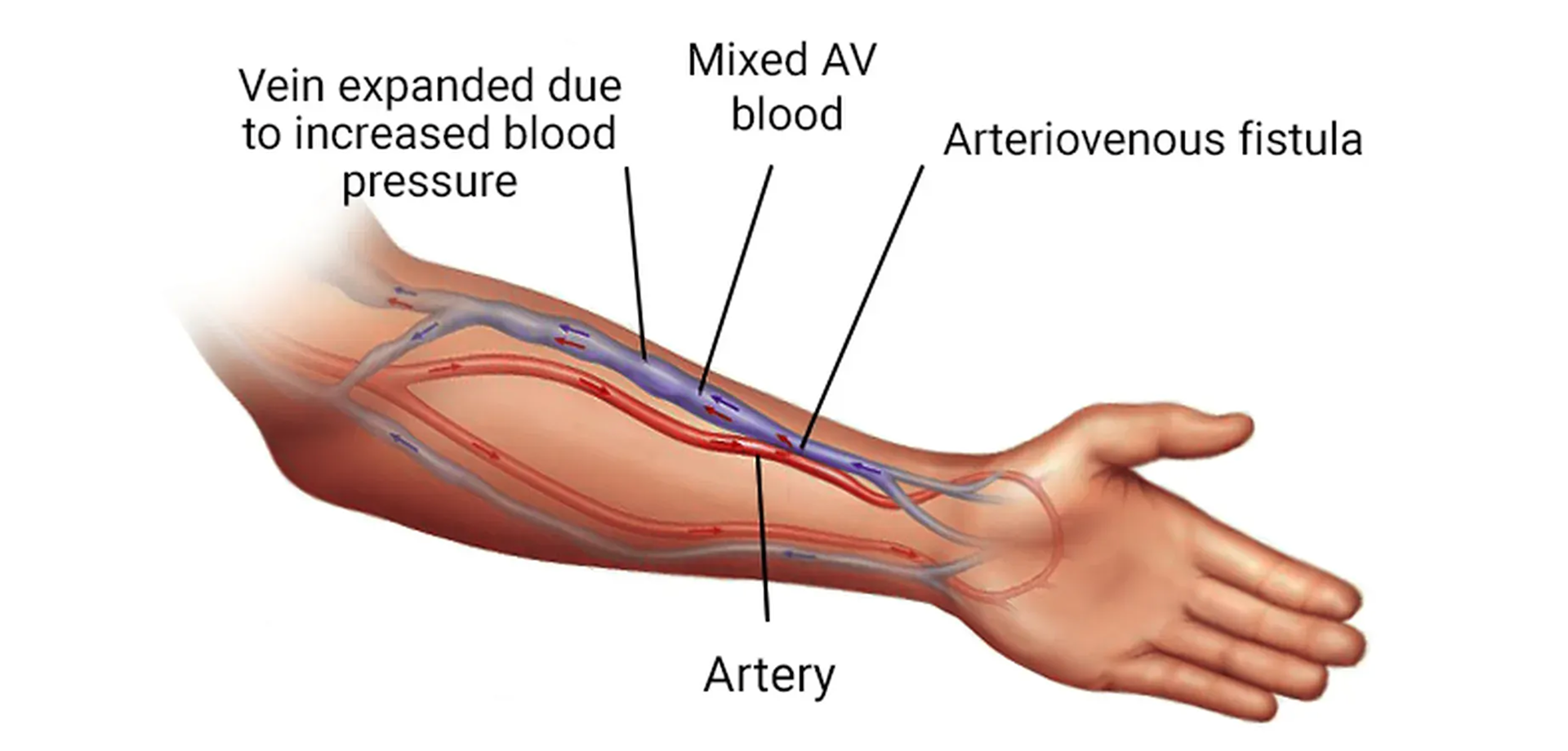
An arteriovenous (AV) fistula is the preferred and most durable form of vascular access for patients requiring long-term hemodialysis. It is created by surgically connecting an artery to a vein, allowing the vein to enlarge and strengthen for repeated dialysis needle insertion.
At International Modern Hospital, AV fistula creation is performed through a coordinated nephrology and vascular surgery pathway, ensuring optimal access planning, early intervention, and long-term functionality. The emphasis is on timely access creation before dialysis initiation whenever possible.
AV fistulas are favored over catheters and grafts due to lower infection risk, better blood flow rates, longer lifespan, and improved dialysis adequacy. However, successful fistula creation requires careful patient selection, vessel mapping, and surgical expertise.
Before surgery, patients undergo detailed vascular assessment using ultrasound vein mapping to identify the most suitable vessels. Factors such as vessel size, location, comorbid conditions, and future dialysis needs are carefully considered.
The procedure is typically performed under local or regional anesthesia and involves minimal recovery time. After surgery, the fistula requires a maturation period during which the vein enlarges and strengthens. Patients are educated on fistula care, exercises to promote maturation, and warning signs of complications.
Post-creation monitoring is critical. IMH ensures regular fistula assessments to confirm adequate blood flow and early detection of stenosis or thrombosis. Family Medicine and dialysis teams reinforce access protection strategies, such as avoiding blood pressure measurements or blood draws on the fistula arm.
By prioritizing early access planning and meticulous follow-up, IMH supports long-term dialysis success and reduces access-related complications.
At International Modern Hospital, AV fistula creation is performed through a coordinated nephrology and vascular surgery pathway, ensuring optimal access planning, early intervention, and long-term functionality. The emphasis is on timely access creation before dialysis initiation whenever possible.
AV fistulas are favored over catheters and grafts due to lower infection risk, better blood flow rates, longer lifespan, and improved dialysis adequacy. However, successful fistula creation requires careful patient selection, vessel mapping, and surgical expertise.
Before surgery, patients undergo detailed vascular assessment using ultrasound vein mapping to identify the most suitable vessels. Factors such as vessel size, location, comorbid conditions, and future dialysis needs are carefully considered.
The procedure is typically performed under local or regional anesthesia and involves minimal recovery time. After surgery, the fistula requires a maturation period during which the vein enlarges and strengthens. Patients are educated on fistula care, exercises to promote maturation, and warning signs of complications.
Post-creation monitoring is critical. IMH ensures regular fistula assessments to confirm adequate blood flow and early detection of stenosis or thrombosis. Family Medicine and dialysis teams reinforce access protection strategies, such as avoiding blood pressure measurements or blood draws on the fistula arm.
By prioritizing early access planning and meticulous follow-up, IMH supports long-term dialysis success and reduces access-related complications.
Quick Contact
If you have any questions simply use the following contact details.

Working Hours
-
Out-patient Department
Monday to Saturday 08:00 AM - 09:00 PM
Sunday 10:00 AM - 06:00 PM
-
Emergency Department & Pharmacy
Sunday to Saturday 24x7


Book Appointments, Inquire, or Manage Your Care Easily – Get in Touch via
 04 406 3000
  04 406 3000
Quick Links
Legal
Working Hours
-
Out-patient Department
Monday to Saturday | 8 AM to 9 PM
Sunday | 10 AM to 6 PM
Emergency Department & Pharmacy | 24x7
Connect with us!




©2026 IMH. All Rights Reserved. Ministry of Health License No : TEBMJIU0-060622